
Product
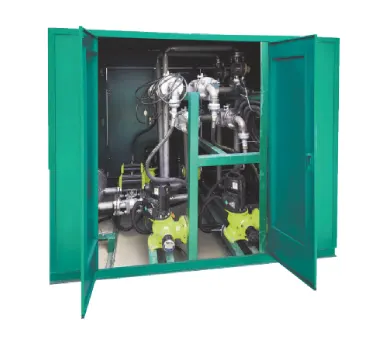
Flue Gas Denitrification System
The SNCR (Selective Non-Catalytic Reduction) process is a post-combustion denitrification method. It removes NOx through a chemical reaction by injecting an appropriate amount of NH₃ or other denitrification agents into the flue duct of thermal power plant boilers, waste incinerators, kilns, or other combustion furnaces.
NH₃ is prepared from a 50% urea solution mixed with a small amount of anti-corrosion additives. The advantage of this denitrification agent is that it is easy to prepare and does not require special safety regulations for handling.
For Selective Catalytic Reduction (SCR) technology, the investment cost for NOx removal is significantly affected by the price and volume of catalysts, while operating costs mainly depend on catalyst lifespan. Therefore, a selective reduction process that does not require catalysts may be more attractive, especially when the required denitrification efficiency is relatively low (<50%). This technology is known as Selective Non-Catalytic Reduction (SNCR).
In this process, reducing agents such as NH₃ or urea are injected into the furnace to react selectively with NOx without the use of catalysts. Therefore, the reducing agent must be injected into a high-temperature zone.
The reducing agent is injected into the furnace at a temperature range of 850–1250 °C. The reducing agent (urea) rapidly thermally decomposes into NH₃, which reacts with NOx in the flue gas through the SNCR reaction to generate N₂. In this method, the furnace itself acts as the reactor.
Studies have found that within the narrow temperature range of 800–1250 °C, NH₃ or urea can selectively reduce NOx in the flue gas without reacting with O₂, even without the presence of a catalyst. Based on this principle, the SNCR method was developed.
Within the 800–1250 °C range, the reduction reactions of NOx using NH₃ or urea are as follows:
Using NH₃ as the reducing agent:
4NH₃ + 4NO + O₂ → 4N₂ + 6H₂O
Using urea as the reducing agent:
2NO + CO(NH₂)₂ + ½O₂ → 2N₂ + CO₂ + 2H₂O
Performance Features
- Multiple SNCR injection technologies are available. Different combinations of injection lances can be used according to various operating conditions to achieve optimal injection performance.
- Reduced operating costs. Since the injected reducing agent only needs to address NOx emissions exceeding the standard, the required dosage is relatively small. The injection quantity can also be adjusted at any time according to boiler load and NOx baseline levels. In general, SNCR reducing agent consumption is more than 50% lower than that of similar methods.
- Relaxed ammonia slip limitations without ABS problems. Unlike SCR processes, the urea-based SNCR process does not increase SO₃ concentration in the flue gas. Escaped NH₃ reacting with SO₃ may form ammonium bisulfite (NH₄HSO₃, ABS), which can easily deposit on the heating surfaces at the rear of the boiler and cause air preheater blockage or corrosion. In SNCR systems, ammonia slip is generally controlled below 5–15 ppm, whereas SCR systems must control it within 1–5 ppm.
- The system uses high-safety reducing agent urea, resulting in improved operational safety.
- In an SNCR system, the furnace itself acts as the reactor, requiring very little installation space while also offering the advantage of low investment cost.
Need a Custom Dust Collector Solution?
Every industrial facility has different dust control requirements. Our engineers are ready to assist you in selecting and designing the most suitable dust collection system for your application